

 April 07, 2013
 desideriahiramcornelieoliver
Free Download The Housing Policy Revolution: Networks and Neighborhoods (Urban Institute Press)
Ease of the language as well as simple works to comprehend come to be the reasons of lots of people attempt to get this book. When you wish to find even more concerning The Housing Policy Revolution: Networks And Neighborhoods (Urban Institute Press), you could see that the author is, that the individual that has actually created the book is. Those will be a lot more amazing. For this reason, you could check out the web page with the web link that we offer in this article. It will not be so complex for you. It will be a lot easier to get.
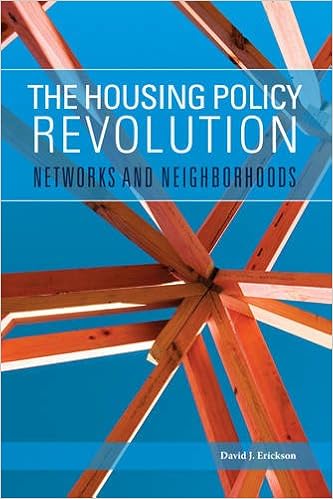
The Housing Policy Revolution: Networks and Neighborhoods (Urban Institute Press)

Free Download The Housing Policy Revolution: Networks and Neighborhoods (Urban Institute Press)
Simple method to get the impressive publication from seasoned author? Why not? The method is very simple if you get guide right here. You require only the book soft data here. It is based on the web links that are published in this web site. By seeing the link, you could get guide directly. And also below, you will certainly figure out numerous sort of the books written by the expert authors from all globe places.
With this problem, when you require a publication hurriedly, never ever be worried. Just find as well as see this site and obtain guide quickly. Now, when the The Housing Policy Revolution: Networks And Neighborhoods (Urban Institute Press) is exactly what you seek in the meantime, you could get this publication straight in this page. By seeing the link that we provide, you could begin to get this book. It is extremely basic, you might not need to go offline as well as check out the library or book shops.
When you can involve the here and now books as The Housing Policy Revolution: Networks And Neighborhoods (Urban Institute Press) in your gadget documents, you can take it as one of the most worldly to read and also enjoy in the spare time. Furthermore, the ease of method to review in the gadget will certainly support your problem. It does not shut the chance that you will not get it in bigger reading material. It means that you just have it in your gadget, does not it? Are you kidding? Discovering the book, compared to make bargain, as well as save the book will not just make more effective system of reading.
Make this book as favourite publication to read currently. There is no far better book with the same subject as this. You could see how the words that are composed are really compatible to motivate your condition to make better. Now, you could likewise feel that things of The Housing Policy Revolution: Networks And Neighborhoods (Urban Institute Press) are proffered not just for making great possibilities for the visitors but also give good atmosphere for the outcome of exactly what to create.
Review
David Erickson helps us understand the dynamic network that constitutes the institution that produces affordable, primarily rental, housing in the United States. He details how this powerful and effective 'social-service complex,' bringing together public and private, state and local, business and nonprofit, left and right, has grown and succeeded because of, indeed in spite of, the trauma of federal budget cuts of the 1980s. Erickson extends the vision to education, health care, and community development and argues that an ever-changing network of specialist producers who are connected with both the capital markets and community residents, can, with an appropriate level of financial support from the federal government, bring back and sustain our nation's poorest neighborhoods--those being devastated by the current financial crisis--and can do it with efficiency and compassion. --Ellen Seidman, Senior Fellow, New America Foundation, and Executive Vice President for National Policy and Partnership Development, ShoreBank CorporationToday's housing crisis requires and enables policymakers to redefine the role of government in housing policy. This redefinition, David Erickson argues, is ongoing and reflects decades of trial and error. Erickson makes a compelling case that community-based networks are the foundation for a new generation of housing policy that calls for and benefits from a holistic approach to community development. Turning the clock back is not a plausible option. --Nicolas P. Retsinas, Director, Joint Center for Housing Studies, Harvard UniversityThe deep economic crisis gripping our nation has only intensified the need to find a more rational, productive relationship between Washington, states and localities, and the nonprofit and private sectors. David Erickson engagingly portrays all of these actors uniting over the past four decades to address America's affordable housing needs and becoming poised to respond to our evolving challenges. In demonstrating how this decentralized network combines political and policy savvy, flexible collaboration, and understanding of private markets to meet community needs and achieve societal goals, Erickson serves up a valuable playbook for advancing a smarter, 21st century federalism. --Alan Berube, Research Director, The Brookings Institution Metropolitan Policy Program
Read more
Review
David Erickson helps us understand the dynamic network that constitutes the institution that produces affordable, primarily rental, housing in the United States. He details how this powerful and effective 'social-service complex,' bringing together public and private, state and local, business and nonprofit, left and right, has grown and succeeded because of, indeed in spite of, the trauma of federal budget cuts of the 1980s. Erickson extends the vision to education, health care, and community development and argues that an ever-changing network of specialist producers who are connected with both the capital markets and community residents, can, with an appropriate level of financial support from the federal government, bring back and sustain our nation's poorest neighborhoods―those being devastated by the current financial crisis―and can do it with efficiency and compassion. ―Ellen Seidman, Senior Fellow, New America Foundation, and Executive Vice President for National Policy and Partnership Development, ShoreBank CorporationToday's housing crisis requires and enables policymakers to redefine the role of government in housing policy. This redefinition, David Erickson argues, is ongoing and reflects decades of trial and error. Erickson makes a compelling case that community-based networks are the foundation for a new generation of housing policy that calls for and benefits from a holistic approach to community development. Turning the clock back is not a plausible option. ―Nicolas P. Retsinas, Director, Joint Center for Housing Studies, Harvard UniversityThe deep economic crisis gripping our nation has only intensified the need to find a more rational, productive relationship between Washington, states and localities, and the nonprofit and private sectors. David Erickson engagingly portrays all of these actors uniting over the past four decades to address America's affordable housing needs and becoming poised to respond to our evolving challenges. In demonstrating how this decentralized network combines political and policy savvy, flexible collaboration, and understanding of private markets to meet community needs and achieve societal goals, Erickson serves up a valuable playbook for advancing a smarter, 21st century federalism. ―Alan Berube, Research Director, The Brookings Institution Metropolitan Policy Program
Read more
See all Editorial Reviews
Product details
Series: Urban Institute Press
Paperback: 264 pages
Publisher: Rowman & Littlefield Publishers (September 4, 2009)
Language: English
ISBN-10: 0877667608
ISBN-13: 978-0877667605
Product Dimensions:
6 x 0.5 x 8.8 inches
Shipping Weight: 13.6 ounces (View shipping rates and policies)
Average Customer Review:
4.6 out of 5 stars
3 customer reviews
Amazon Best Sellers Rank:
#2,036,550 in Books (See Top 100 in Books)
The Housing Policy Revolution: Networks and Neighborhoods, by David J. Erickson, director of the Center for Community Development Investments at the Federal Reserve Bank of San Francisco, is published by the Urban Institute Press, 2009The Housing Policy Revolution is a top-notch analysis and review of affordable housing policy in America over the past 50 years and cogent thoughts for future directions. I own this book.Arising out of Erickson's PhD thesis at Berkeley, this book has inputs ranging from MIT to the Urban Institute and Brookings, and the Federal Reserve. Accordingly Erickson has written a thoughtful and careful book with thorough data and policy views in a comprehensive and readable. I have worked in affordable housing for many years, and learned a lot from Erickson's book.Erickson's general view is that development of affordable housing has generally evolved from directly-built and sponsored to a decentralized housing network including CDCs, state and local government agencies, capacity-building intermediaries, new private sector participants, foundations, churches, and other decentralized entities.There are 6 chapters:1. "Directions in housing policy from Lyndon Johnson to Ronald Reagan, 1963-1986". Chapter 1 discusses housing policy history in two phases: rise and fall of direct federal involvement, and federal cutbacks starting in 1981, with reviews of policies and activities from Lyndon Johnson's Great Society through Ronald Reagan's housing cutbacks.2. "Building the decentralized housing network". Chapter 2 looks in detail at the decentralized housing network, showing how the various components grew in sophistication and capacity over the 1980s.3. "Fighting for federal resources for the decentralized housing network". Chapter 3 discusses how the new network matured and secured more funding, influence and production capacity, building more housing than the Great Society programs did, and growing politically. Erickson discusses the establishment of housing tax credits in 1986 and changes and challenges to the tax credit programs over the next 20 years.4. "Lessons learned from what was built". Chapter 4 discusses examples and case studies of individual low-income apartments built by this decentralized housing network, showing growth of expertise and relationships within the network and enhanced capabilities. Multiple financing programs brought different players into a web of mutual support and supervision, with improving coordination and mutual supervision.5. "The decentralized housing network and the rise of a new institution". Chapter 5 discusses the growth and maturation of this decentralized housing network. Erickson shows, e.g. that by 2005 the number of CDC-built affordable rental units was 848,000; and while in 1969 there were 112 CDCs building affordable housing, by 2005 there were over 4,600.6. "How does thinking like a network change our approach to public policy?" Chapter 6 discusses broader issues and future paths, discussing, e.g. what happens when communities of concentrated poverty lack access to community development networks, and how might new technology enhance network outcomes.Housing Policy Revolution by David J. Erickson is an excellent addition to the professional working library of affordable housing practitioners, and Mr. Erickson is to be congratulated for his hard work and excellent book.by David HoickaThe Housing Policy Revolution: Networks and NeighborhoodsISBN-10: 0877667608ISBN-13: 978-0877667605
Erickson provides a deep history of federal housing policy during the 20th century, highlighting the advent of public-private partnerships since the 1970's. This analysis provided a basis for how Seattle area public housing has resulted in mixed use projects that have built commercial & reduced income housing to mix with exclusively low-income. Erickson explains well how private sector and community organizations thrived in absence of direct federal spending, however these "networks" have still been unable to meet the housing needs of America's most needy citizens. In celebrating these public-private partnerships, Erickson also seems to minimize the risk of the sub-prime mortgage market. Overall, a good read to understand modern urban development.
I couldn't agree more with David Hoicka's review. I, too, have been in the affordable housing industry for years (14 now and counting), but only after reading David Erickson's lucid book did a clear picture of housing evolution in this country coalesce for me. From the '60s Great Society to the inchoate CDC network of the '70s, through the Reagan decimation years and subsequent creation of the Low Income Housing Tax Credit program, and finally to the rise, maturation, and sophistication of the "decentralized housing network," Erickson charts the fascinating history of the affordable housing industry, providing invaluable context and inspiring affirmation for the work that we do. Cheers to David Erickson for adding this important volume to the housing policy canon.
The Housing Policy Revolution: Networks and Neighborhoods (Urban Institute Press) PDF
The Housing Policy Revolution: Networks and Neighborhoods (Urban Institute Press) EPub
The Housing Policy Revolution: Networks and Neighborhoods (Urban Institute Press) Doc
The Housing Policy Revolution: Networks and Neighborhoods (Urban Institute Press) iBooks
The Housing Policy Revolution: Networks and Neighborhoods (Urban Institute Press) rtf
The Housing Policy Revolution: Networks and Neighborhoods (Urban Institute Press) Mobipocket
The Housing Policy Revolution: Networks and Neighborhoods (Urban Institute Press) Kindle
 Posted in


